Hier möchte ich Euch jetzt mal, eine ganz besondere ABU Cardinal 33 vorstellen! Bei meinen Ausführungen, handelt es sich um meine eigene private Meinung zu dieser Rolle! Meine Vermutungen, versuche ich natürlich mit ein paar Fakten zu untermauern, trotzdem ist vieles eine Vermutung und muss nicht stimmen! Gerne könnt ihr mir mal eure Meinung zu dieser Rolle über diese Seite, mit der Kommentar Funktion mitteilen, das würde mich freuen? Wegen der großen Seltenheit dieser Rolle, bin ich leider gezwungen, über manche Fotos, einen Kopierschutz zu legen!
I would like to introduce you to a very special ABU Cardinal 33! The views I am sharing here represent my own personal opinion about this reel. While I naturally try to back up my assumptions with facts, much of what I say remains speculative and may not necessarily be correct. I would be delighted if you shared your thoughts on this reel via the comment function on this page. Due to the extreme rarity of this reel, I am unfortunately compelled to apply copyright protection to some of the photos.
Ich vermute, das es sich bei dieser Rolle, um ein Vorserien oder Funktionsmodell, der Repro Cardinal 33 von ca. 1990 handelt? So weit ich weis, sind 3 Stück dieser fast identischen Rollen bekannt? Früherer wurde mal vermutet, das diese Rollen aus Mitte oder Ende der 70ziger Jahren stammen könnten! Das ist auf jeden Fall falsch, warum das könnt ihr, auf den nächsten Fotos sehen!
I suspect that this reel might be a pre-production or functional prototype of the Cardinal 33 reissue from around 1990. As far as I know, three of these nearly identical reels are known to exist. It was previously speculated that these reels might date back to the mid- or late 1970s! That is definitely incorrect, you can see why in the following photos!
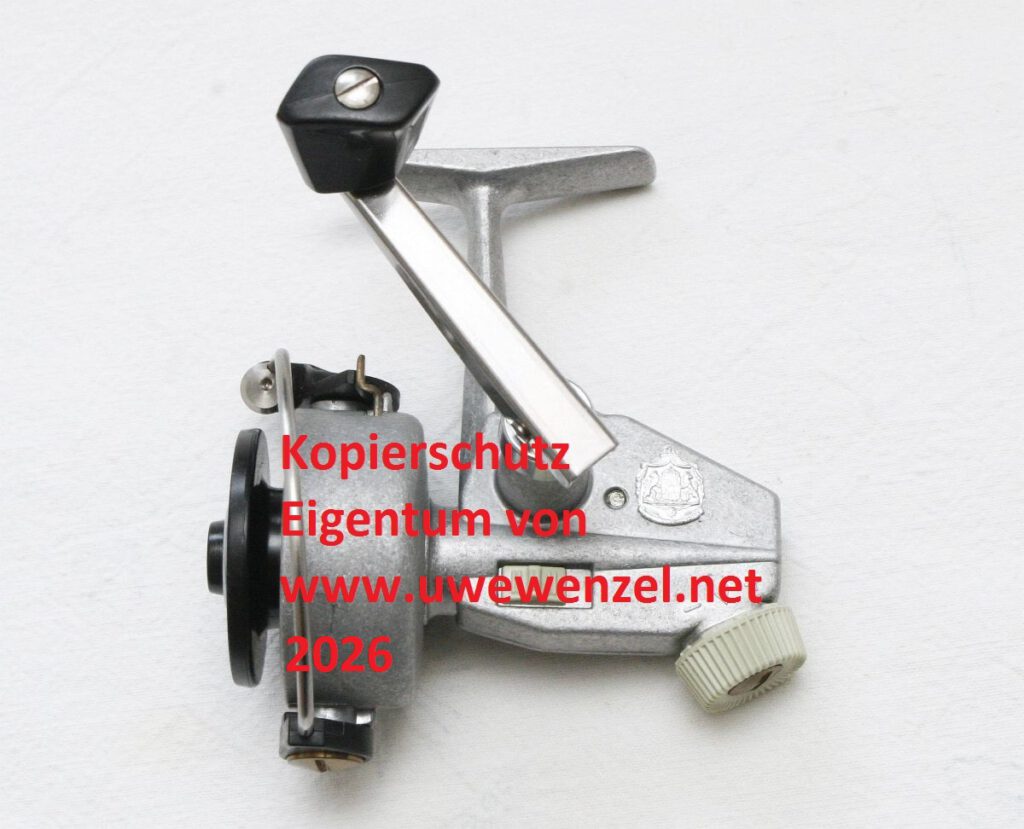
ABU Cardinal 33, Vorserien oder Funktionsmodell
Fußnr. ohne
Baujahr: 1989-90
Meine Artikelnr.: 177
Übersetzung: 5,1:1
Kokillennaht am Gehäuse: Verputzt
Achsantriebsarm Version III: abgekantet, 2 C-Clip´s und eine Nietverbindung
Stärke des Antriebsrades: 3mm
ABU Cardinal 33, Pre-production or functional model
Foot number: without
Year of manufacture: 1989-90
My item no.: 177
Gear ratio: 5,1:1
Mold seam on housing: Trimmed
Drive arm Version III: Bent, 2 C-clips and a riveted joint
Drive gear thickness: 3mm
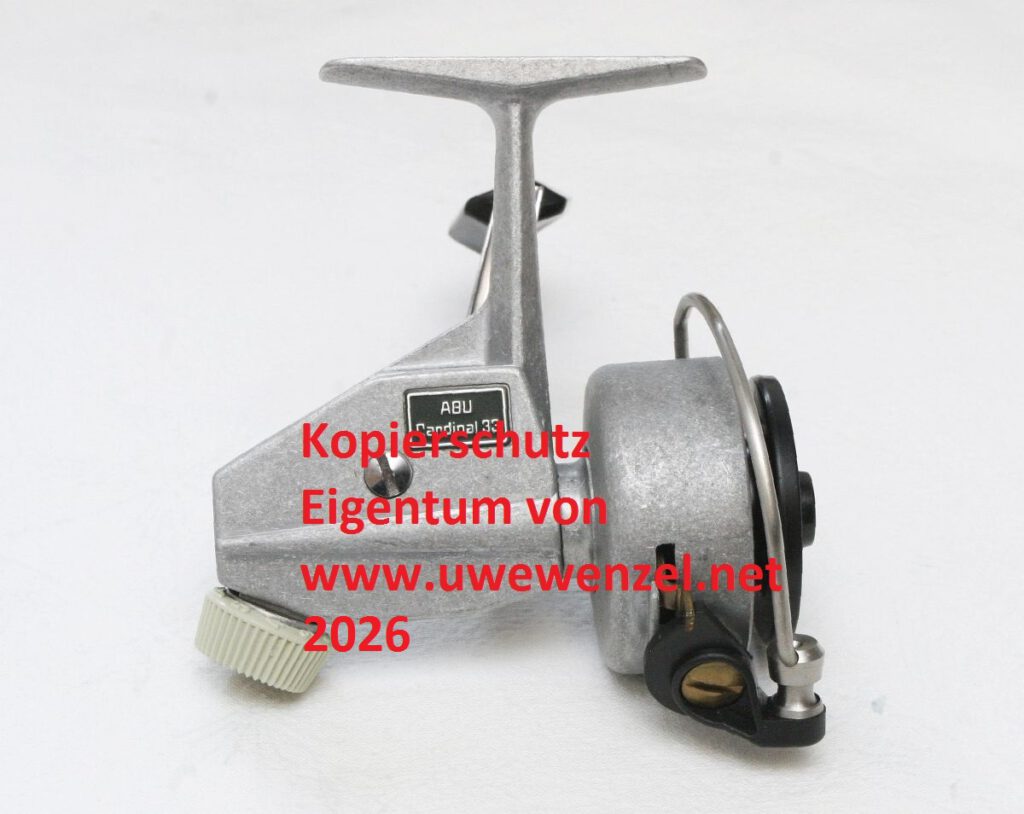
Die Rolle wurde nicht lackiert, sie ist Innen und Aussen blank. Außerdem sind einige Teile nicht vernickelt oder verzinkt, sie sind Messing blank. Aber das Typenschild und der Aufkleber am Rotor wurden angebracht.
The reel was not lacquered, it is bare metal inside and out. Furthermore, some parts are not nickel-plated or galvanized, they are bare brass. However, the nameplate and the sticker on the rotor were applied.
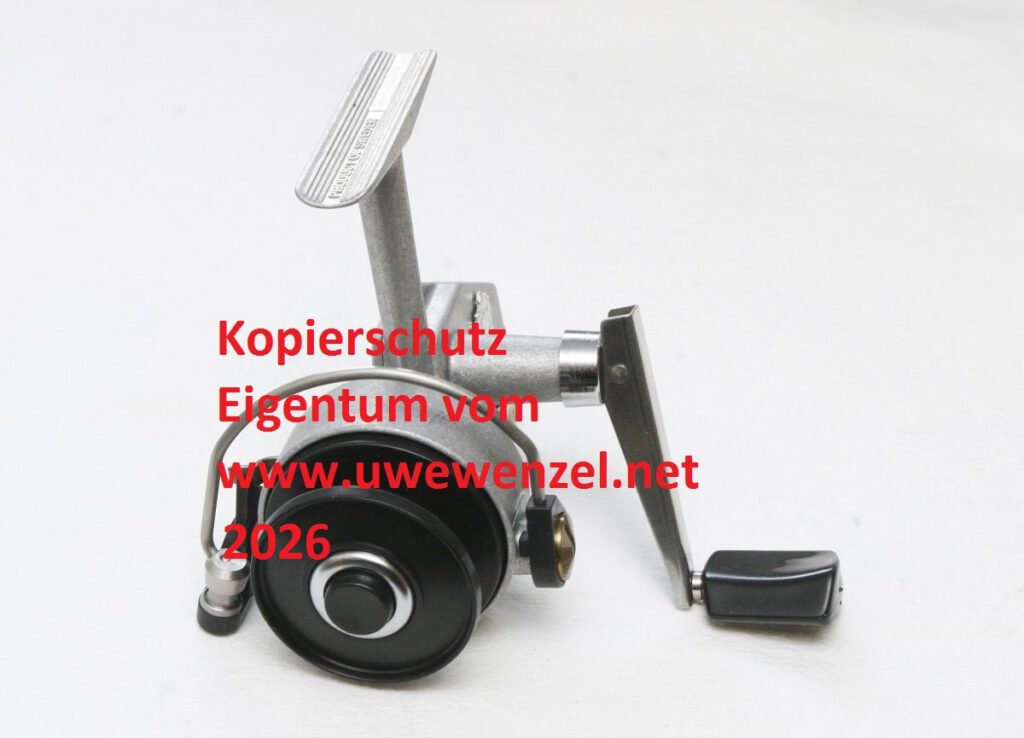
In der Vorderansicht fällt eigentlich nur auf, das die ältere Kurbel wieder verwendet wurde, was ich auch sehr gut finde!
From the front view, the only thing that really stands out is that the older crank was used.
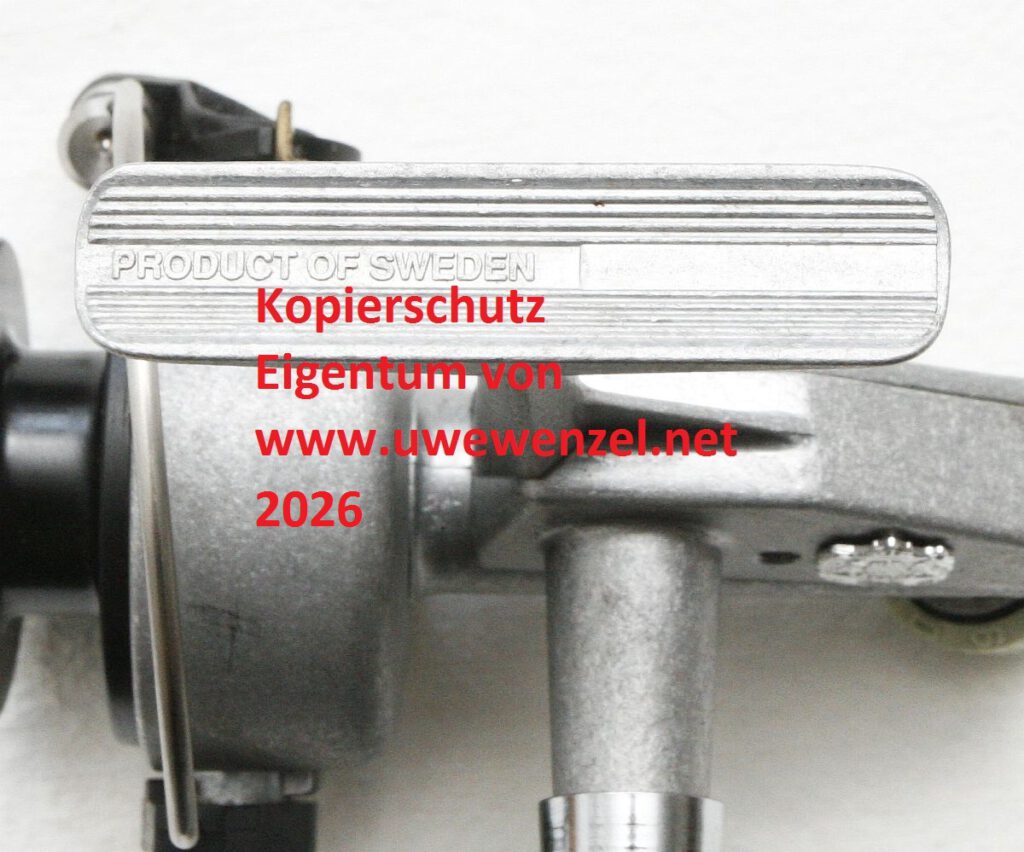
Keine Fußnr. und kein Garcia Schriftzug!
No footno. and no Garcia lettering!
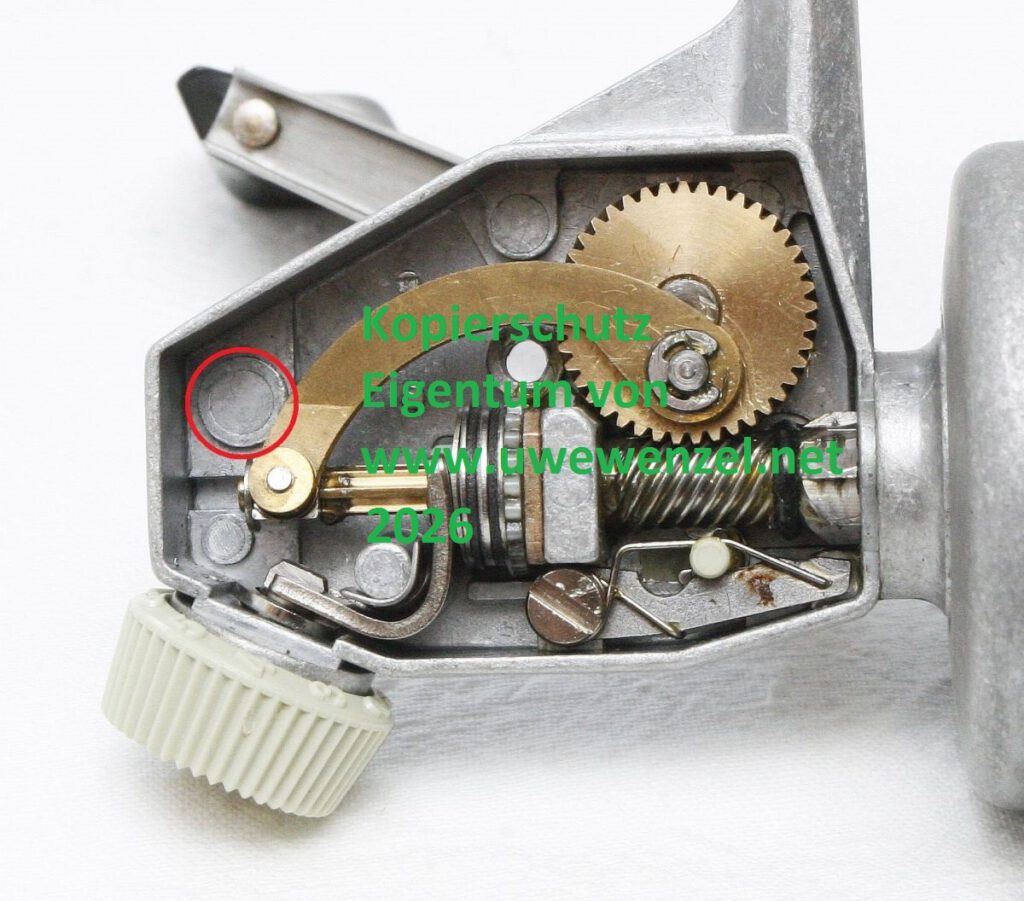
Hier sieht man, der Achsantrieb Version III mit dem 3mm Schneckenrad wurde verwendet, wie an den Cardinal 3 Modellen. Ansonsten kann man erkennen, es handelt sich um ein völlig neues Getriebegehäuse mit einigen Unterschieden, am meisten fällt der grössere Butzen oben links auf (rote Markierung). Daran könnt ihr die Neubaugehäuse von Olympic, sofort erkennen! Der Achsantrieb weist keine Oberflächenbeschichtung auf, er ist Messing blank.
Here you can see that the Version III drive assembly with the 3mm worm gear was used, just like on the Cardinal 3. Otherwise, it is evident that this is a completely new gear housing with a few differences, the most noticeable feature is the larger boss at the top left (red mark). That is how you can instantly identify the newly designed housings, from Olympic! The axle drive has no surface coating, it is bare brass.
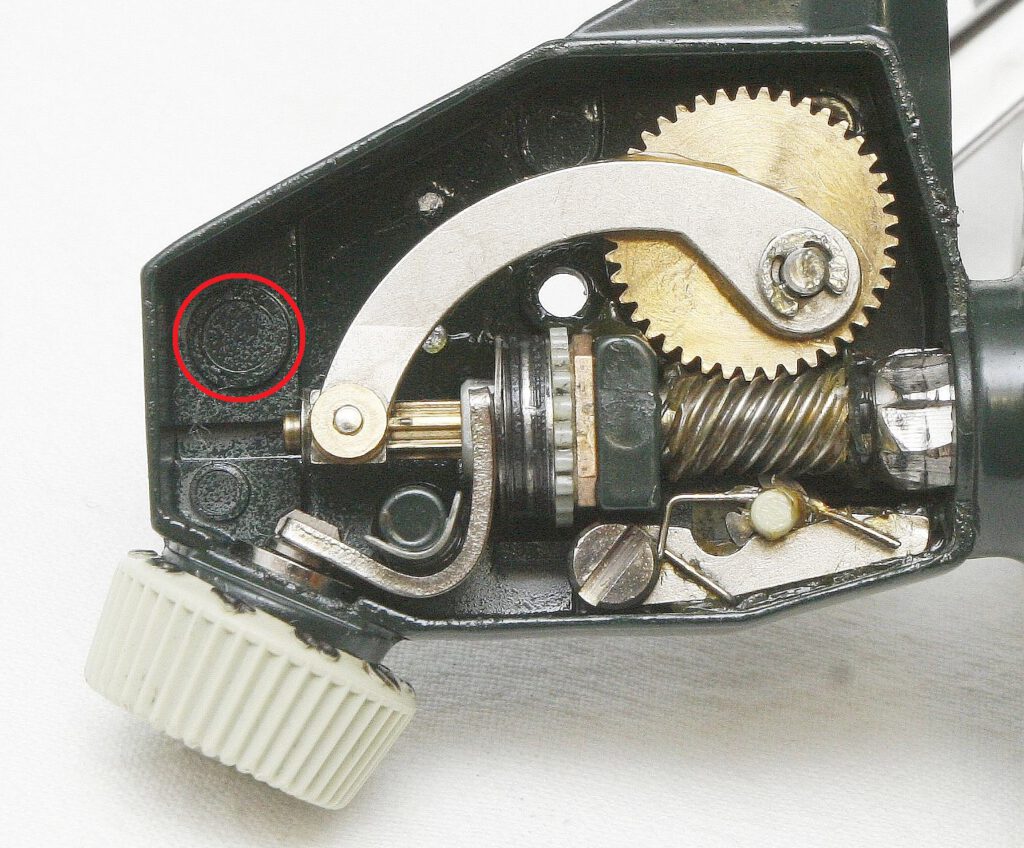
Hier zum Vergleich ein serienmäßiges Olympic Gehäuse (Japan), Anfang der 90ziger Jahre. Es hat auch den grosse Butzen.
For comparison, here is an Olympic housing (Japan), from the early 1990s. It also features the large central boss.
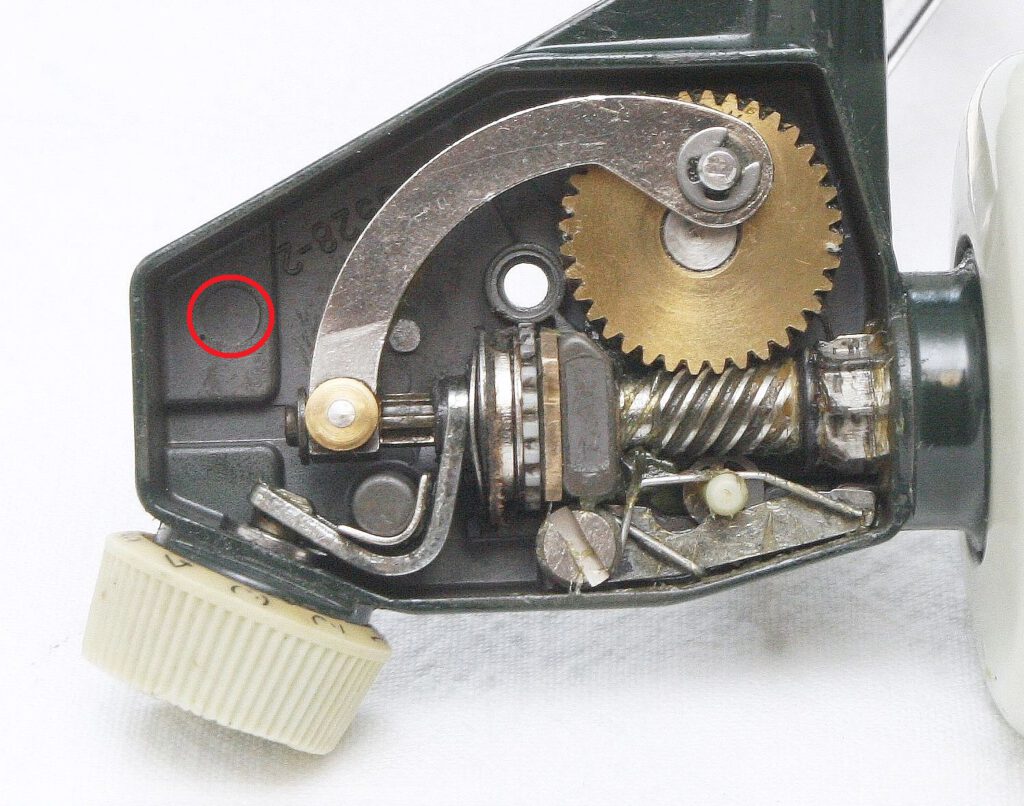
Hier eine Svängsta Cardinal 33 von 1976, made in Schweden, der Butzen ist deutlich kleiner (rote Markierung). Ebenfalls kann man rechts neben der Markierung, die Gussnr. erkennen. Die „neuen“ Gehäuse haben diese Nr. nicht mehr.
Here is a Svängsta Cardinal 33 from 1976, made in Sweden, the raised circular boss is noticeably smaller (red mark). You can also see the casting number to the right of the mark. The „new“ housings no longer have this number.
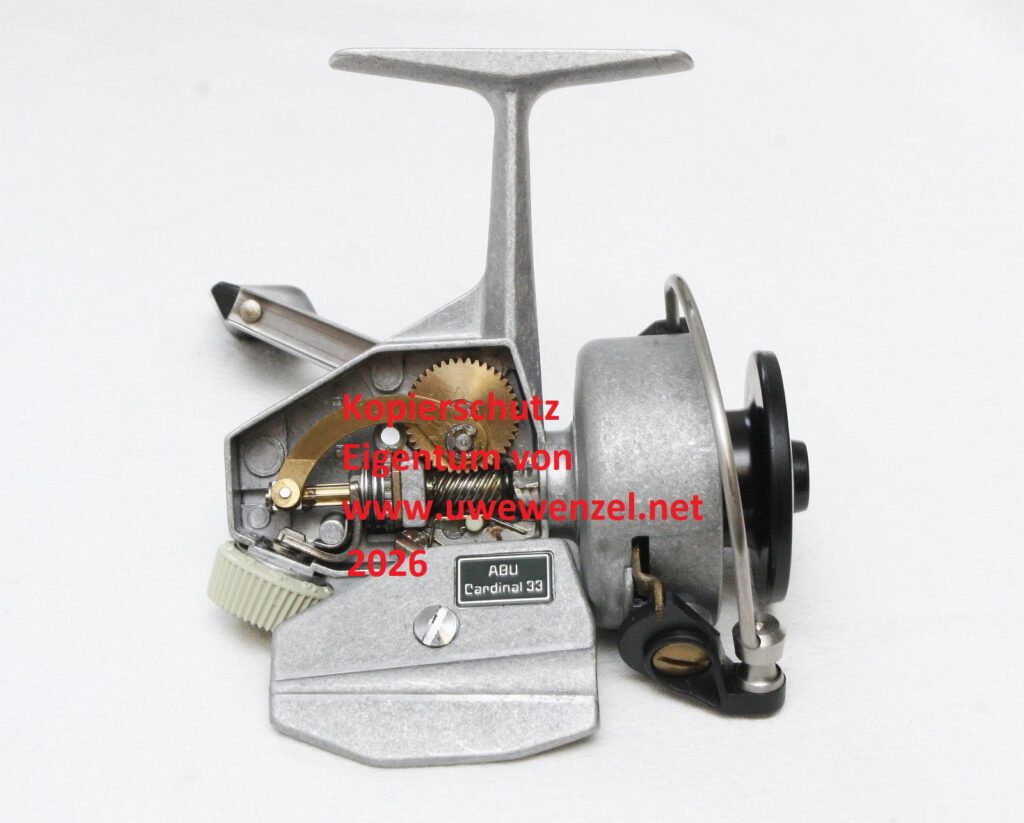
Hier nochmal die geöffnete Rolle im Ganzen!
Here is the opened reel again in its entirety!
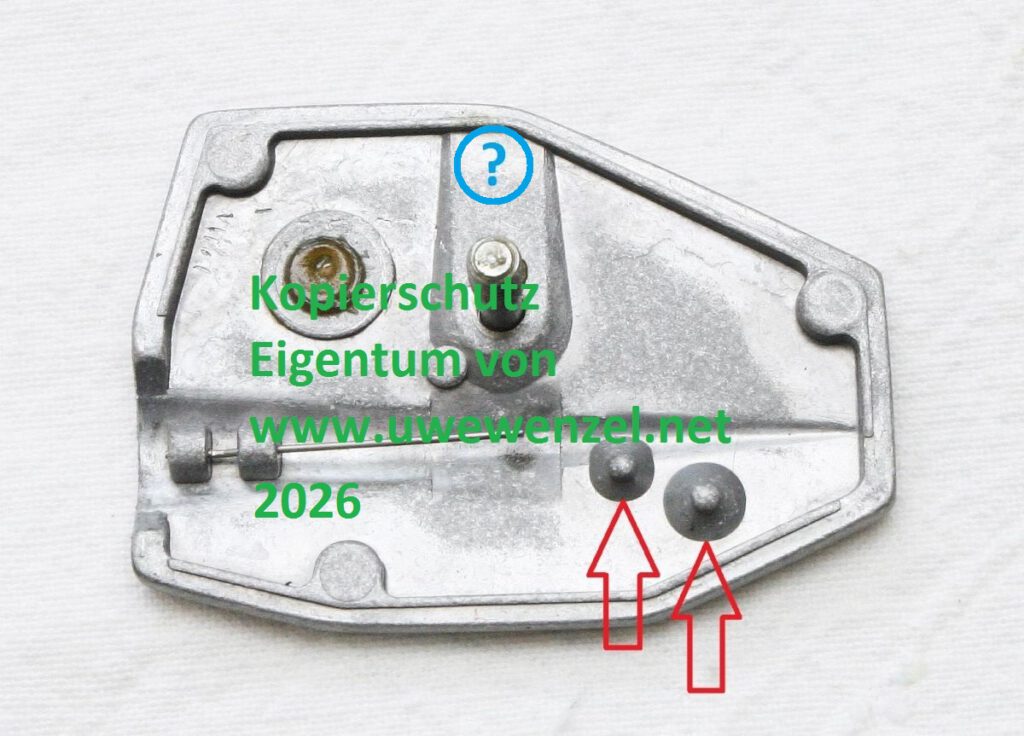
Hier erkennt man die beiden Stifte (rote Markierung) sind neu dazu gekommen und der Butzen oben (blaue Markierung) ist verschwunden.
Here you can see that the two pins (red mark) have been newly added, and the nub at the top (blue mark) has disappeared.
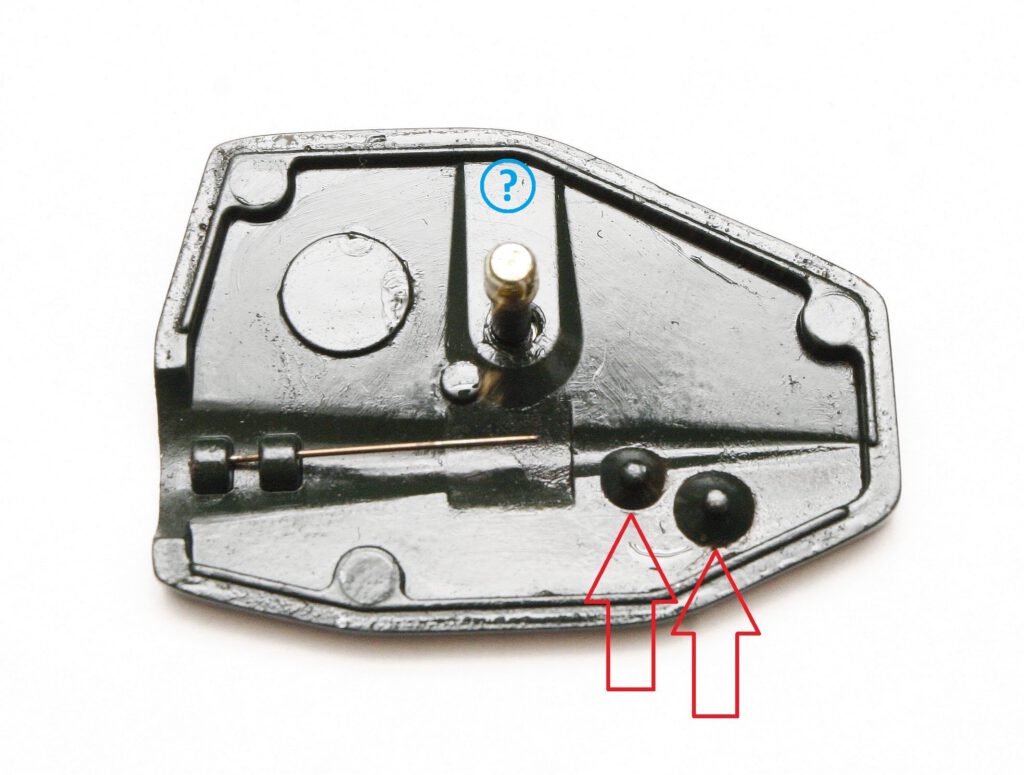
Hier wieder zum Vergleich, ein Seitendeckel aus Anfang der 90ziger Jahre von Olympic, er ist identisch wie von unserem farblosem Prototyp.
Here, for comparison, is a side cover from the early 1990s from Olympic, it is identical to the one from our colorless prototype.
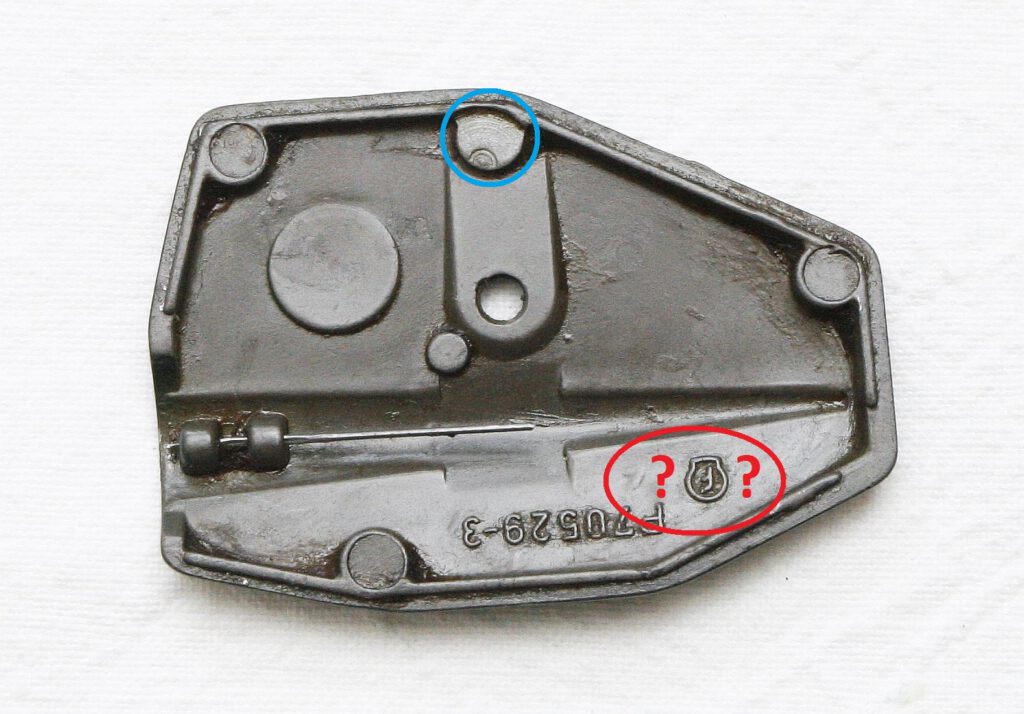
Hier zum Vergleich, ein Seitendeckel Cardinal 33 von 1976 Svängsta, made in Schweden! Er hat keine Pin´s (rote Markierung) unten eine Gussnr. und oben mittig einen Butzen (blaue Markierung).
For comparison, here is a side plate from a 1976 Cardinal 33 (Svängsta, made in Sweden). It has no pins (red mark), a casting number at the bottom, and a small raised boss in the upper center (blue mark).
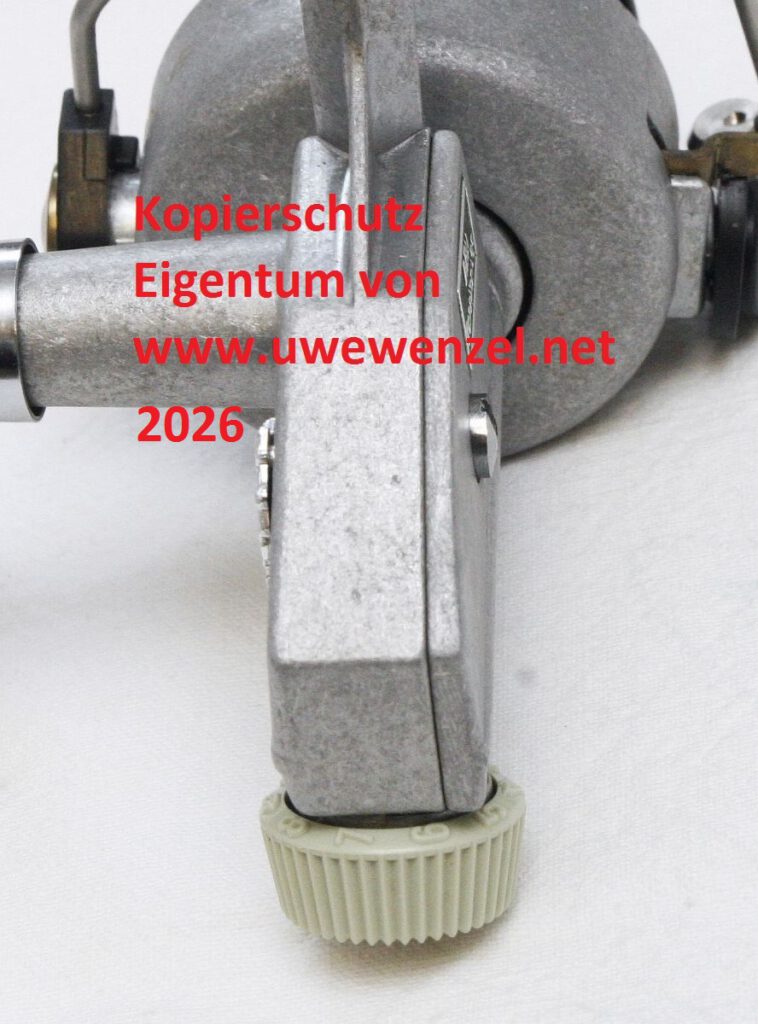
Hier sieht man die Gussnaht in der Mitte des Gehäuses, ist wieder verschliefen, wie bei den frühen Cardinal 33 Versionen bis 1975! Außerdem sieht man am Bremsrad wurden die Zahlen nicht schwarz lackiert.
Here you can see the casting seam in the middle of the housing, it has been ground smooth again, just like on the early Cardinal 33 versions from before 1975! You can also see that the numbers on the drag wheel have not been painted black.
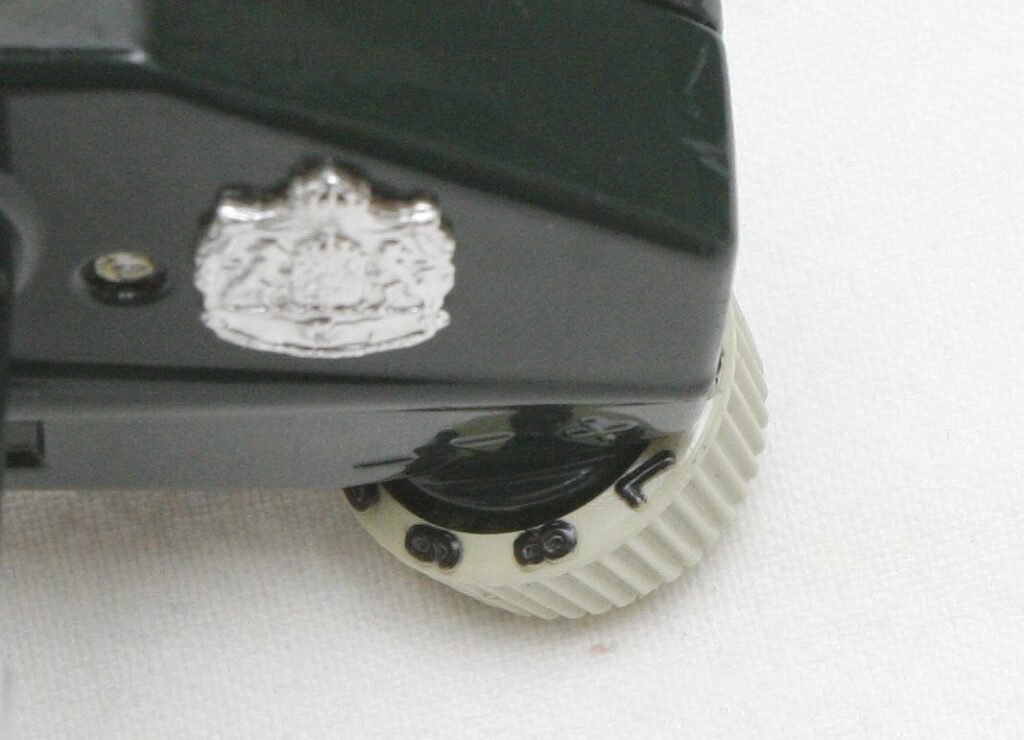
Hier nochmal zu Vergleich, ein Bremsrad von 1977 (hohe Zahlen) schwarz lackiert.
For comparison, here is a brake wheel from 1977 (large numerals), painted black.
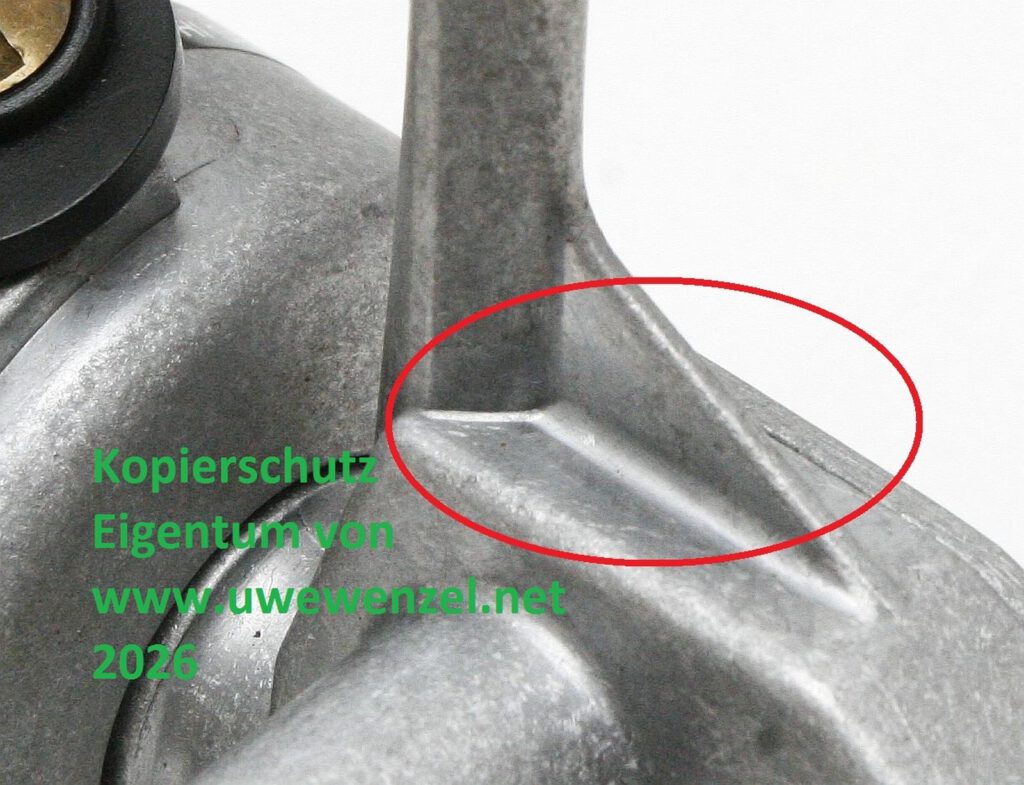
Hier kann man erkennen das die Aluminiumgussteile, nach dem verputzen noch getrommelt wurden. Denn das relativ grobe Trommelmaterial, kam nicht in die 90 Grad Ecken, sie glänzen noch etwas stärker (rote Markierung), beim Glasstrahlen wäre das nicht der Fall gewesen!
Here, you can see that the cast aluminum parts were tumbled after fettling. This is because the relatively coarse media did not reach the 90-degree corners, and those areas have a slightly higher sheen (red mark), that wouldn’t have been the case with glass bead blasting!
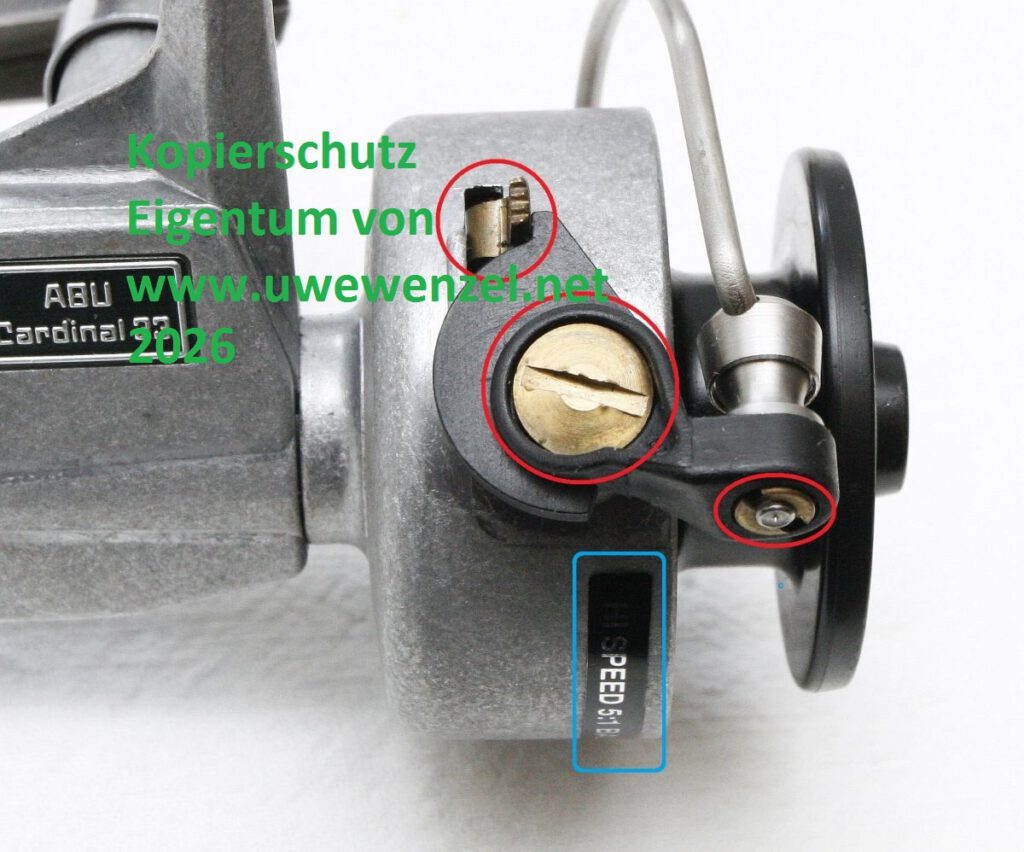
Hier erkennt man, weitere Teile waren ebenfalls nicht Oberflächenbehandelt (rote Markierung) dennoch wurde der Aufkleber am Rotor angebracht (blaue Markierung).
Here, one can see that other parts had also not undergone surface treatment (red mark), yet the sticker was applied to the rotor (blue mark).
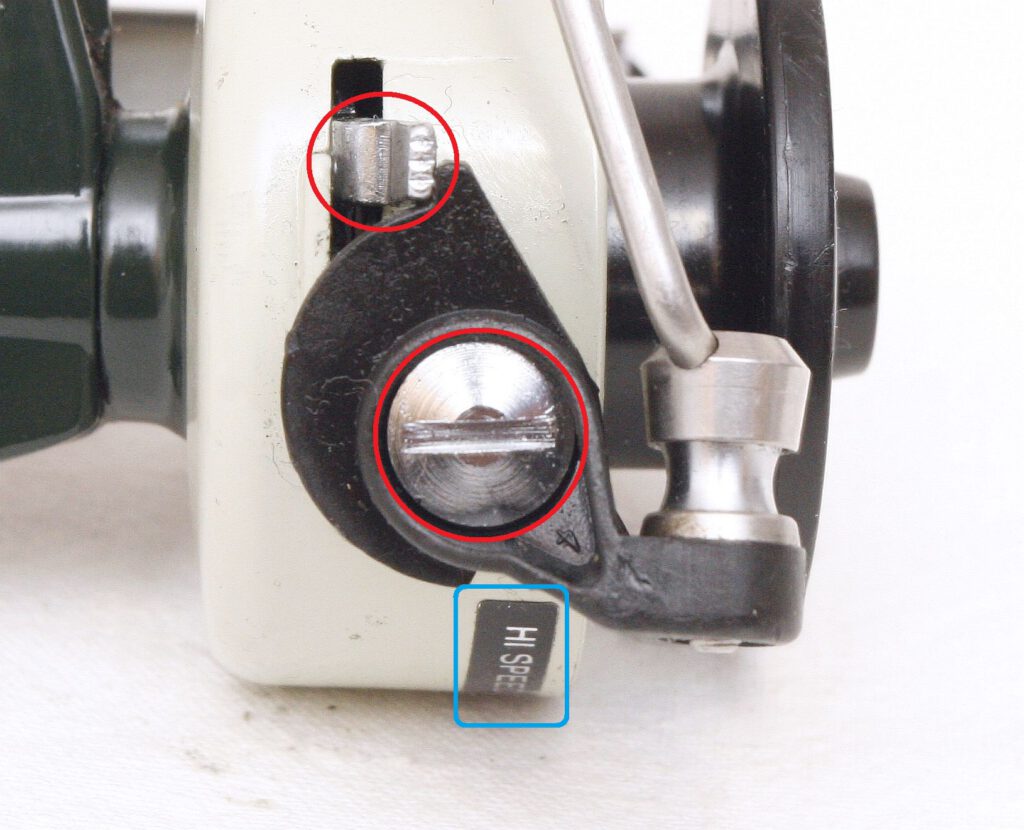
So sahen die Teile mit normaler Oberfläche, von einer Olympic Cardinal 33 (ca. 1992) aus.
This is what the parts with a standard finish from an Olympic Cardinal 33 (circa 1992) looked like.
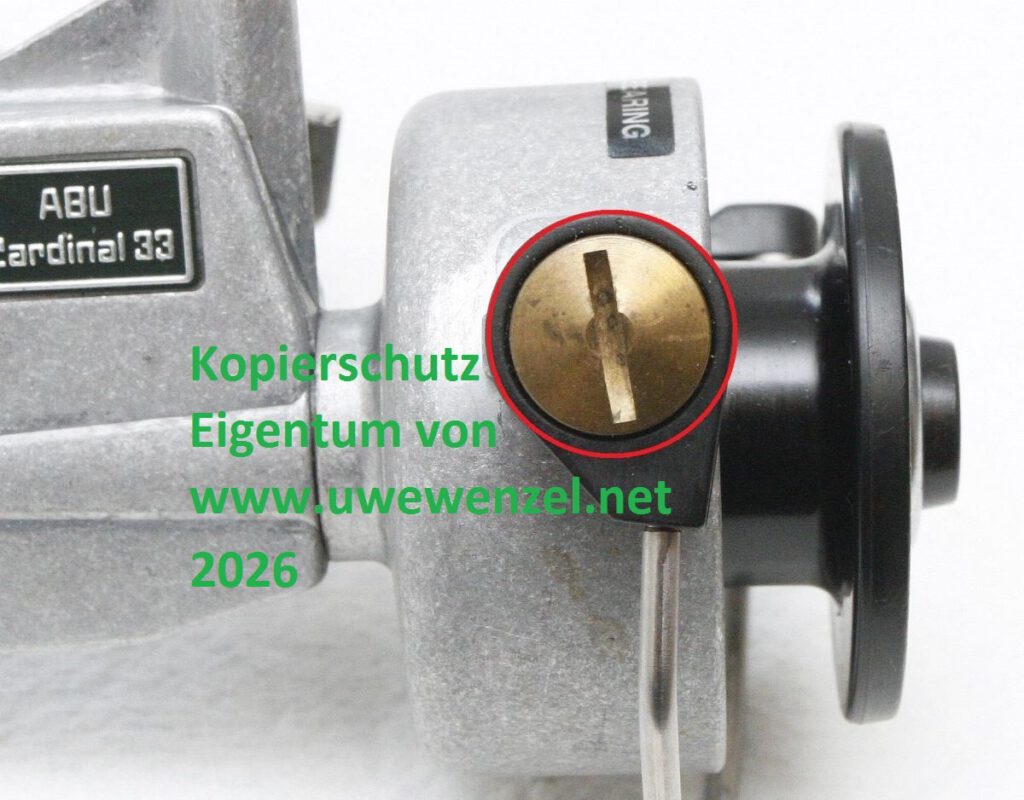
Auch auf der anderen Seite, ist die Bügelschraube, Messing blank.
The screw on the other side is also bare brass.
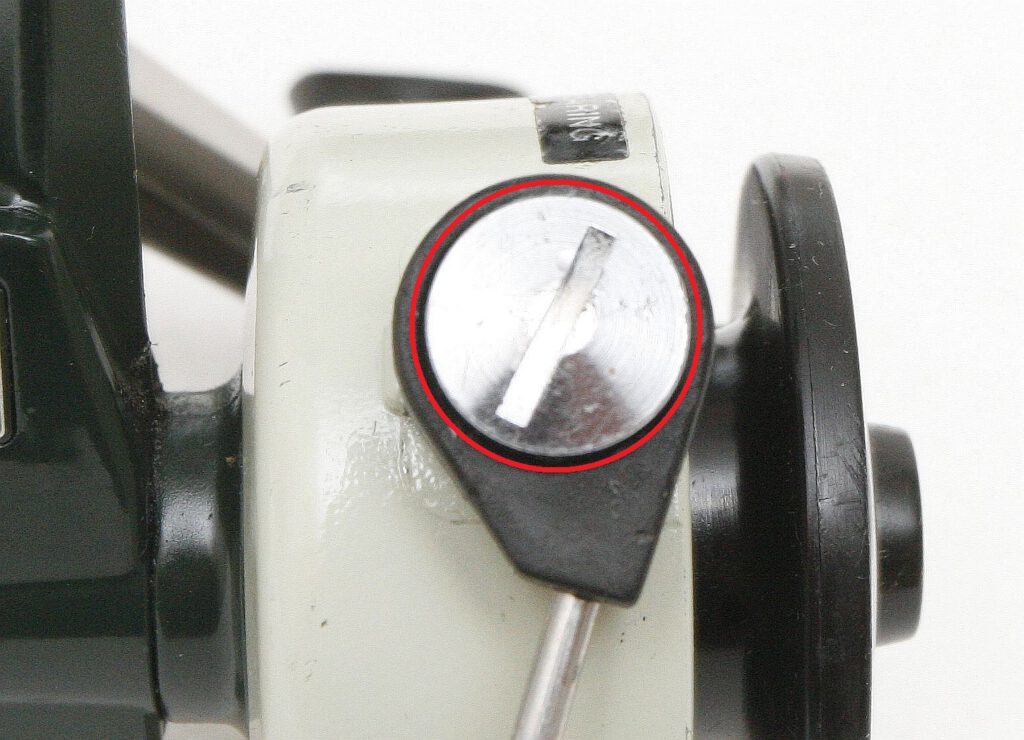
Auch hier zum Vergleich, eine normale Oberfläche, der Olympic Cardinal 33 Rolle von ca.1992.
For comparison, here is the standard finish of the Olympic Cardinal 33 reel from around 1992.
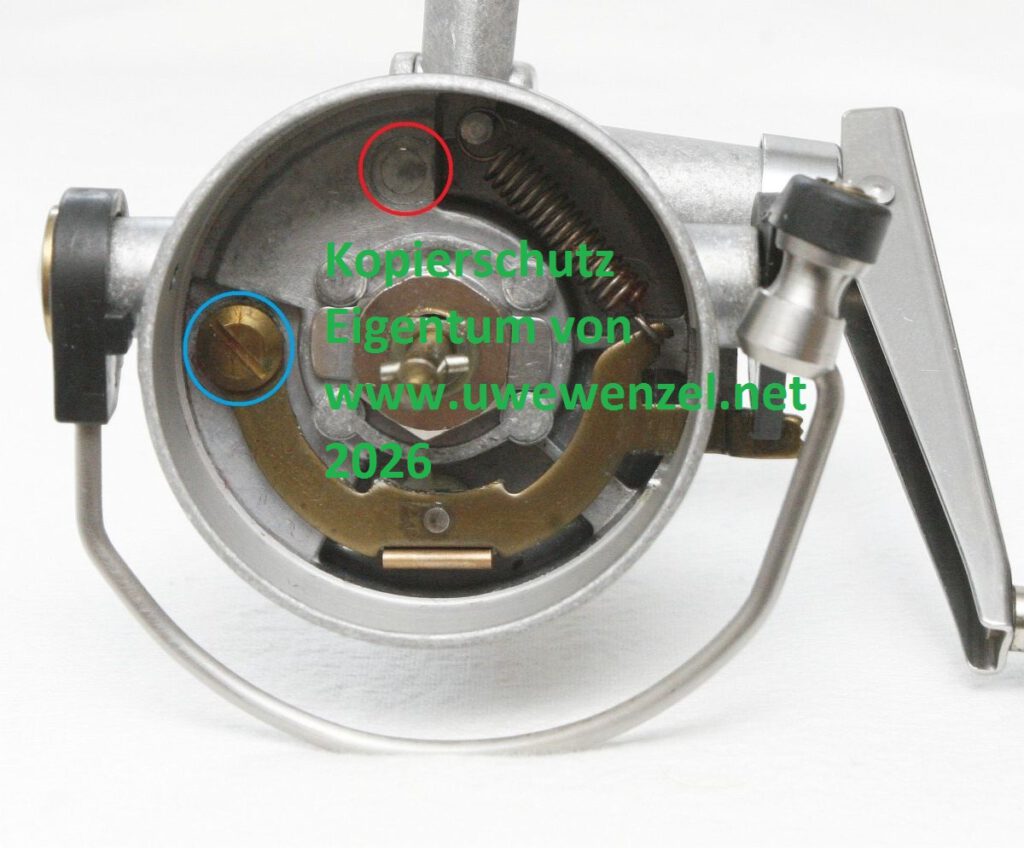
Auch hier im Rotor wieder, Bügelauslöser und die Halteschraube, sind nicht Oberflächen behandelt. Außerdem fällt auf, das die Fase der Halteschraube jetzt deutlich größer geworden ist (blaue Markierung) wie an den alten Modellen, bis 1977. Und man sieht oben, hat der Rotor, jetzt einen neuen Butzen bekommen (rote Markierung).
Here again on the rotor, the release lever and its retaining screw lack any surface treatment. It is also noticeable that the chamfer on the retaining screw is now significantly larger (blue mark) than on the older models (pre-1977). And, as can be seen at the top, the rotor has now been given a new boss (red mark).
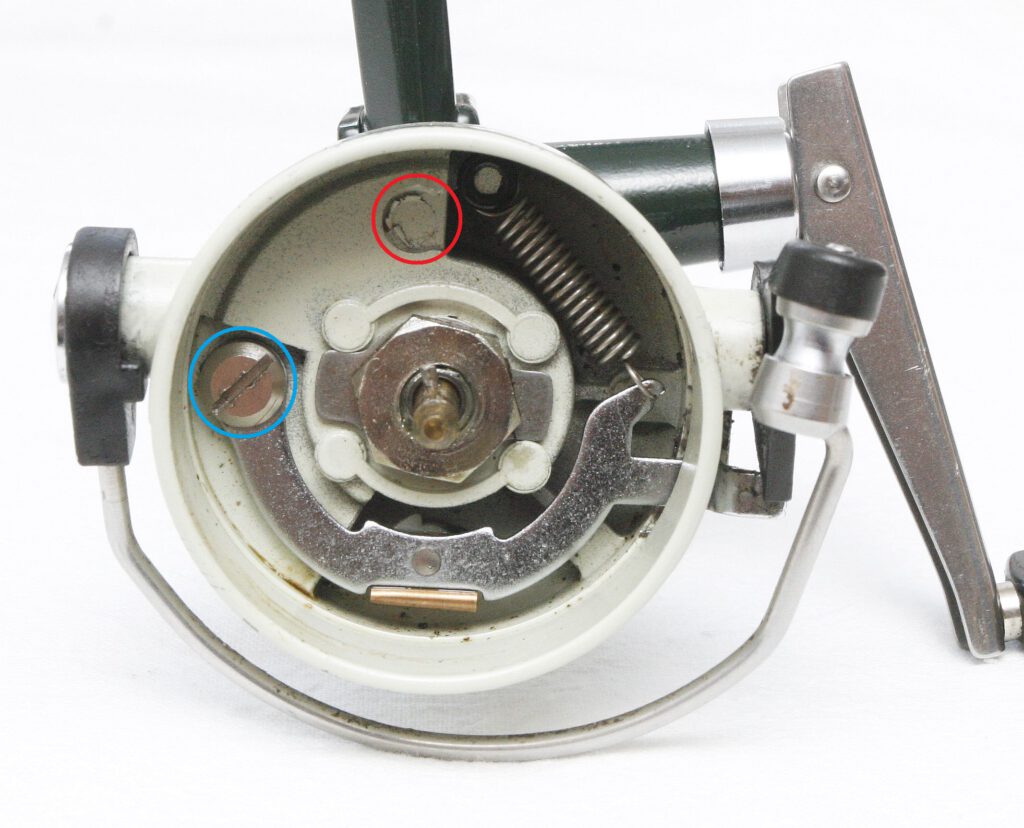
Und hier wieder zum Vergleich, eine serienmäßige Cardinal 33, von Olympic von ca.1992. Deutlich ist die größere Fase (blaue Markierung) und der neue Butzen oben (rote Markierung) zu erkennen.
And here, for comparison, is an Olympic Cardinal 33 from around 1992. The larger chamfer (blue mark) and the new boss at the top (red mark) are clearly visible.
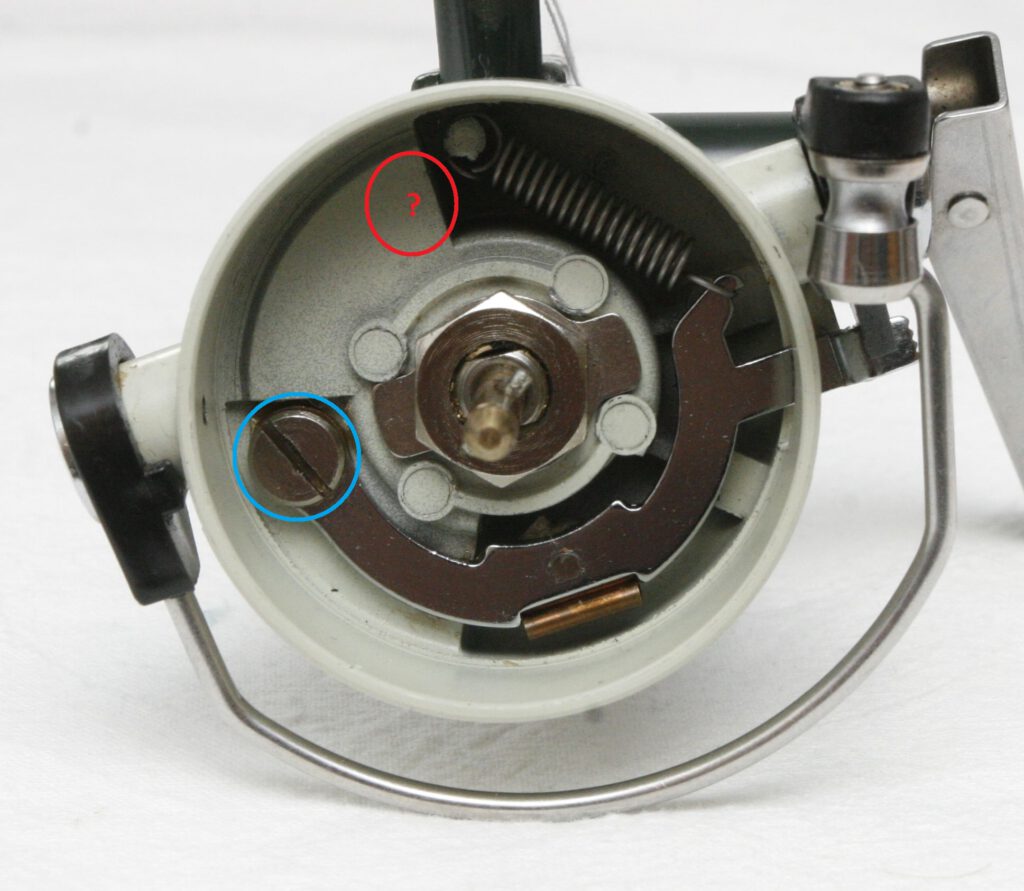
Hier zu Vergleich wieder eine Cardinal 33 von 1977, made in Schweden, aus der „alten“ Serie. Man sieht, die Schraube hat eine deutlich kleinere Fase (blaue Markierung) und der Butzen oben fehlt ganz (rote Markierung).
For comparison, here is another Cardinal 33 from 1977, made in Sweden and from the „old“ series. You can see that the screw has a noticeably smaller chamfer (blue mark) and the small boss at the top is completely missing (red mark).
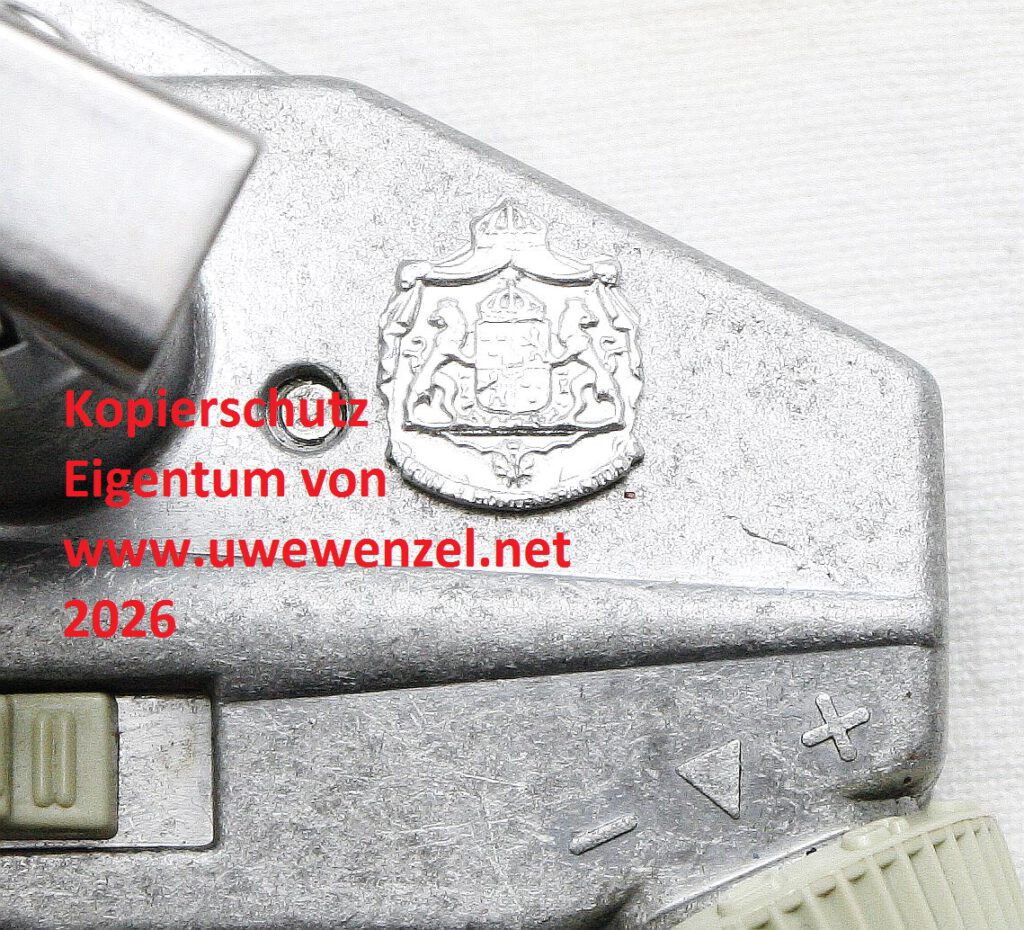
An dem Emplem fällt auf, die Schrift und die Außenkanten sind irgendwie verwaschen und undeutlich! Das lässt die Vermutung aufkommen, das es sich bei diesem Emplem, um ein Abguss oder Nachguss handelt?
What stands out about the emblem is that the lettering and outer edges look somewhat washed-out and indistinct. This suggests that the emblem might be a cast or a reproduction.
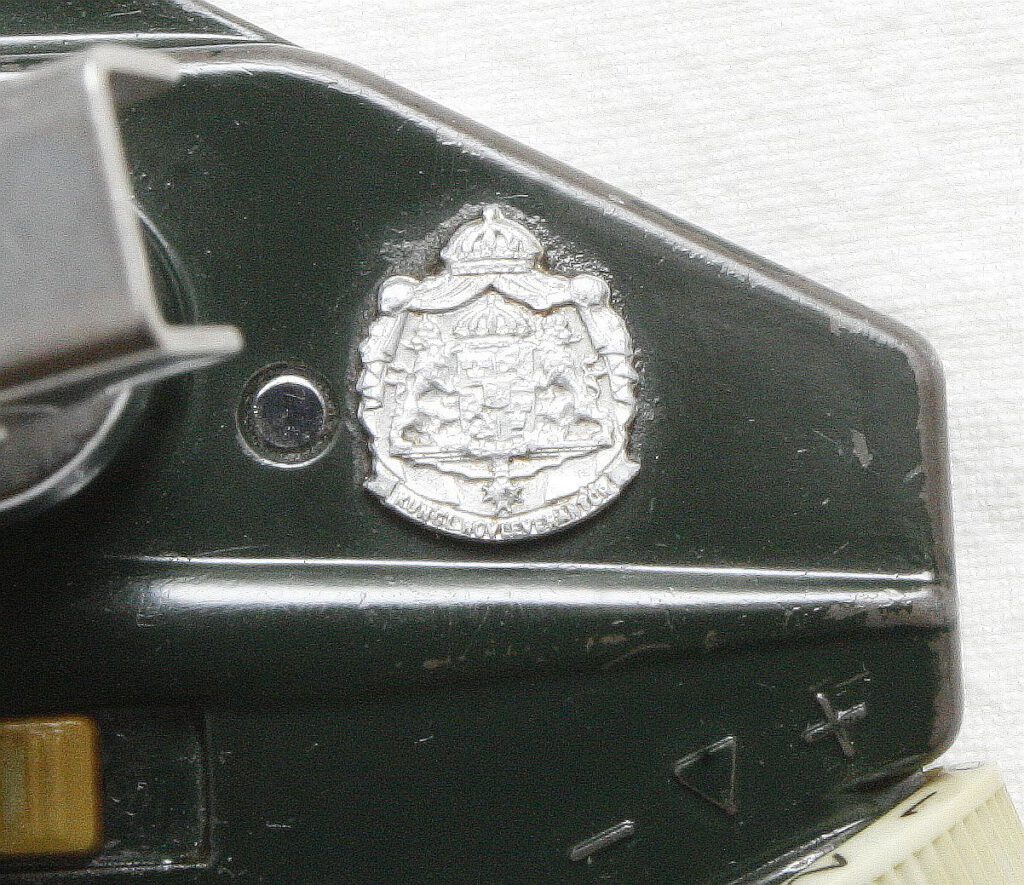
Obwohl dieses Emplem schon über 50 Jahre alt ist, sieht es irgendwie schärfer aus und auch der Rand ist irgendwie größer?
Even though this emblem is over 50 years old, it somehow looks sharper, and the border seems larger, too?
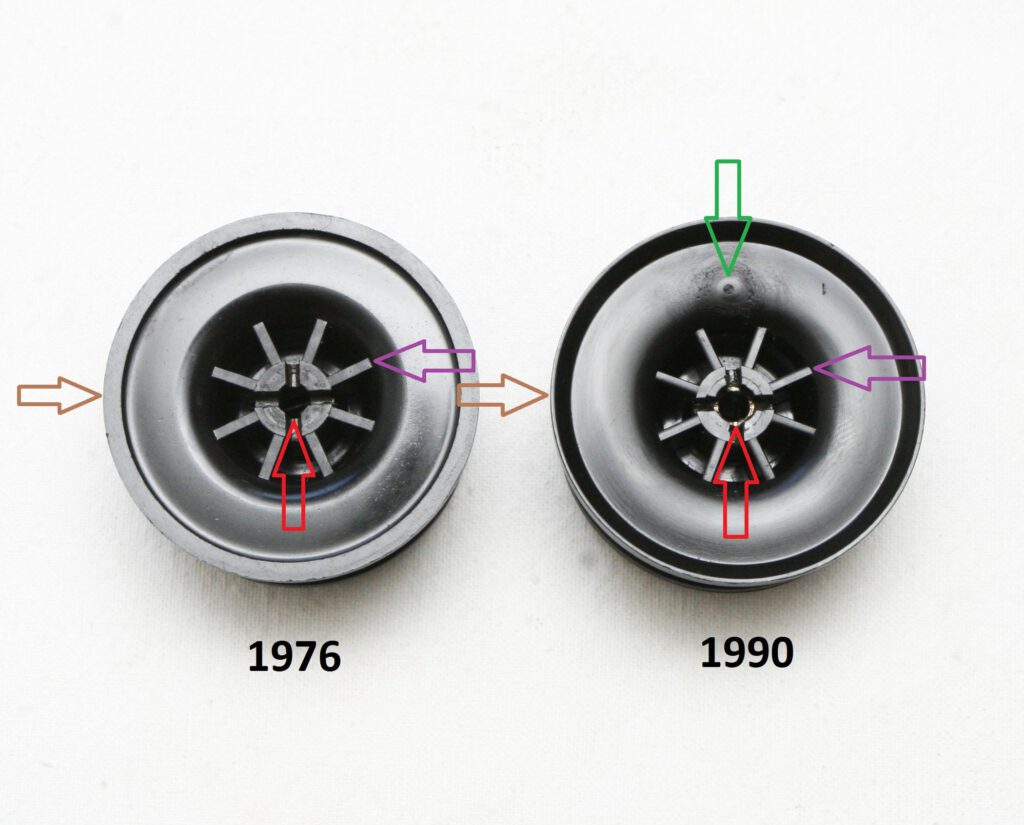
Und hier nochmal zu Vergleich, die alte und die neue Kunstoffspule. Der größte Unterschied ist der schmälere Rand und die Führung aus Messing bei dem 1990 Modell.
And here, for comparison, are the old and new plastic spools. The biggest difference is the narrower rim and the brass guide on the 1990 model.